
Complete Off-Grid Solar System: What “Complete” Actually Means
A “complete off-grid solar system” isn’t a box you buy. It’s a power system—more like a small private utility—built from components that must match each other in voltage, power limits, charging behavior, and real-world usage.
Panels, batteries, and an inverter are only the visible pieces. The systems that run reliably for years usually include the less glamorous essentials too: correctly sized conductors, disconnects, fusing, grounding, surge protection, and a plan for the weeks when solar production is poor.
Many “complete off-grid kits” bundle the big-ticket items but leave gaps in wiring, protection, and load planning. That’s rarely malicious — those details depend on the site — but it’s where many builds fail.
This guide focuses on full-system completeness. No brand rankings. No “best kit” lists. The goal is simple: after reading, you should know exactly what belongs in a complete off-grid build, what must be sized, and what’s optional.
Reality Check: Why Off-Grid Systems Fail
Off-grid design guidance from organizations such as:
- the U.S. National Renewable Energy Laboratory (NREL)
- Verasol certification frameworks
- manufacturer engineering manuals
consistently emphasizes that reliability depends on correct sizing, protection hardware, and architecture alignment — not just panels and batteries.
Most field failures trace back to:
- undersized PV for winter production
- insufficient battery autonomy
- missing protection hardware
- inverter mismatch
Professional designs start with loads and architecture — not equipment shopping.
What “Complete” Means in Practical Terms
A complete off-grid solar system can:
- Generate power (PV array)
- Store power (battery bank)
- Convert power kit (inverter/charger)
- Control charging (MPPT or hybrid inverter inputs)
- Protect itself (fuses, breakers, surge protection)
- Distribute power safely (AC/DC panels, grounding)
- Survive low-sun periods (generator or alternate charging)
- Stay maintainable (monitoring and service access)
That is what “complete” looks like in the real world.
The Core System Architectures (Pick This First)
Architecture determines everything downstream.
1. DC-Coupled Off-Grid
Panels feed charge controllers → batteries → inverter → loads.
- Simple and proven
- Battery-centered
- Charge controller sizing is critical
Common for cabins and full off-grid homes.
2. Hybrid All-in-One (DC-Coupled)
Panels feed the hybrid inverter’s MPPT inputs.
- Fewer boxes
- Cleaner wiring
- Integrated charging
Protection hardware and conductor sizing still matter.
3. AC-Coupled Hybrid
PV operates through AC-side inverters while a battery inverter manages storage.
- Useful for retrofits
- More configuration complexity
If unsure, most new builds benefit from DC-coupled or hybrid all-in-one designs.
Complete Off-Grid Solar System Components (Full Checklist)
A) Power Generation
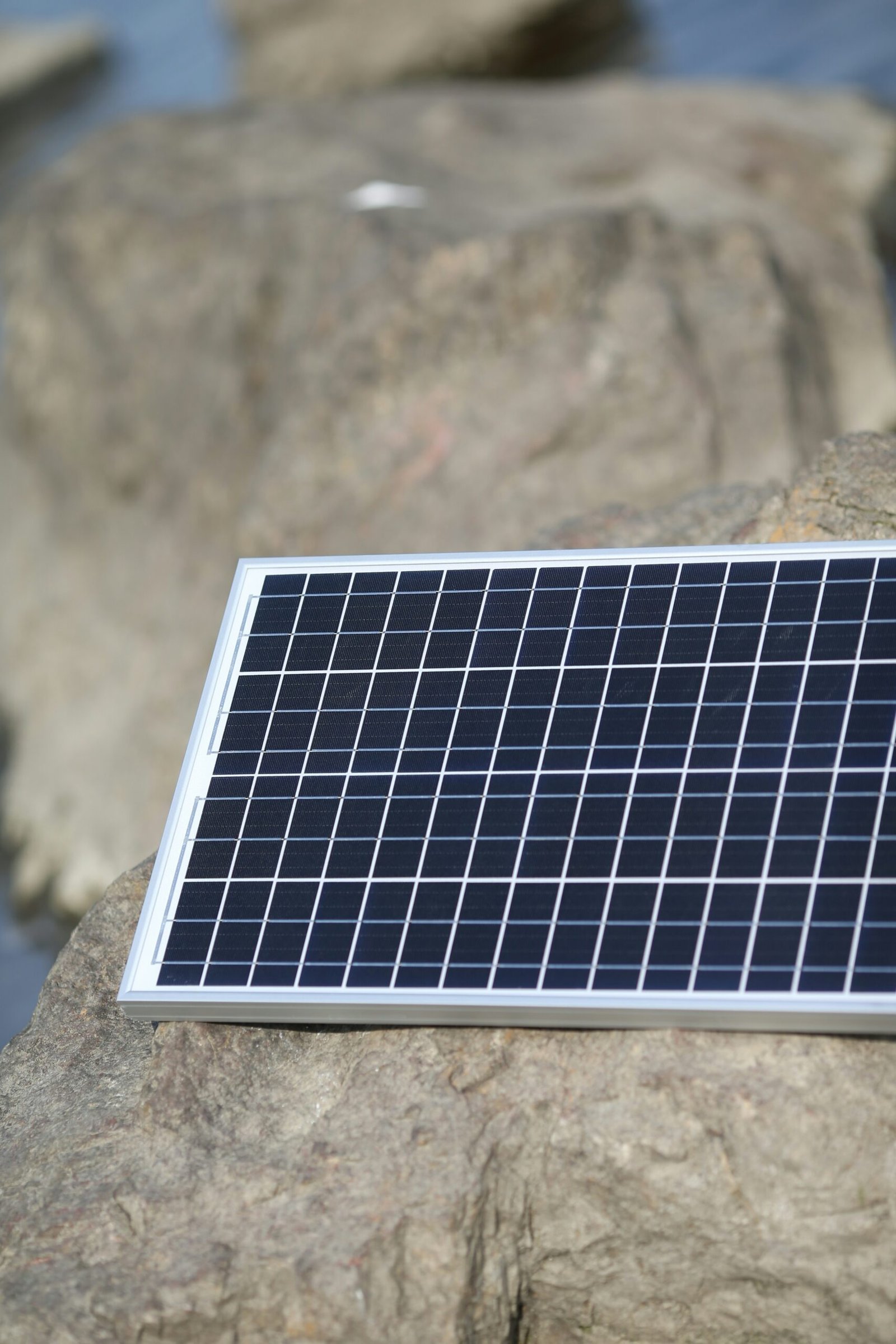
- Solar panels (PV modules)
- Mounting/racking (roof, ground, pole)
- PV wire with UV-rated insulation
- Combiner box (for multiple strings)
- DC disconnect
Kits often include panels — but real completeness includes the conductors and junctioning that make them safe.
B) Charging & Control
- MPPT charge controllers or hybrid MPPT inputs
- Battery temperature sensing
- Correct charge profiles
- Battery communications (optional but valuable)
MPPT vs PWM selection remains a foundational design decision in most off-grid guides.
C) Energy Storage
- Battery bank (LiFePO₄ common today)
- Main battery disconnect
- DC-rated battery fusing
- Busbars and properly rated cabling
- Battery placement plan (temperature + access)
Battery sizing drives PV size and generator reliance — which is why it sits at the center of system design.
D) Inversion (AC Power)
- Pure sine wave inverter cost/charger
- Transfer switching
- AC distribution panel
- Neutral/ground bonding strategy
The inverter is not just a converter — it is the system’s power manager.
E) Backup Energy (Highly Recommended)
- Generator
- Input breaker
- Charging pathway
- Fuel strategy
Multi-day low-sun events are normal in many climates. Generator backup is often the most cost-efficient resilience layer.
F) Protection & Safety Hardware (Where “Complete” Usually Breaks)
- DC breakers and fuses
- Surge protection devices
- Grounding and bonding
- Rapid shutdown / de-energization where required
- Proper labeling
Under NEC-style rules, rapid shutdown requirements (commonly associated with NEC 690.12) often influence equipment selection.
G) Monitoring & Maintenance (Optional — but Smart)
- Monitoring platform or shunt
- Spare fuses and connectors
- Torque tools
- Inspection schedule
You don’t need a control room — just enough visibility to catch problems early.
What an Incomplete System Looks Like (Real Example)
Consider a common DIY setup:
- 6 kWh battery
- 3 kW inverter
- undersized winter solar battery backup
- no generator plan
On paper, it works.
During a three-day storm:
- batteries drain
- inverter trips on surge
- generator must be sourced urgently
- battery stress accelerates wear
Nothing “broke.”
The design simply lacked resilience.
Complete systems are engineered for bad weeks — not sunny ones.
The 5-Step Sizing Method That Keeps Systems Honest
Step 1 — Calculate Daily Energy Use
Skip this and you will either overspend or underbuild.
Continuous loads add up faster than expected.
Step 2 — Choose Days of Autonomy
Lifestyle | Typical Target |
Weekend cabin | 1–2 days |
Full-time + generator | 2–3 days |
Full-time minimal generator | 3–5 days |
Seven days is possible — just expensive.
Step 3 — Size Usable Battery Capacity
Usable kWh ≈ Daily kWh × Autonomy days
Account for allowable depth of discharge to avoid “paper capacity” mistakes.
Step 4 — Size the Inverter for Peak + Surge
You need:
- Continuous output for normal demand
- Surge capacity for motors
Often one well pump dictates inverter size.
Step 5 — Size PV for the Worst Month
Undersized winter production causes many off-grid disappointments.
Design for the lowest solar period — not the best.
System Architecture Matrix
Component | DC-Coupled | Hybrid All-in-One | AC-Coupled |
Panels + racking | ✅ | ✅ | ✅ |
Charge controllers | ✅ | Built-in | Depends |
Batteries | ✅ | ✅ | ✅ |
Inverter | ✅ | ✅ | ✅ |
Generator | Recommended | Recommended | Recommended |
Disconnects | ✅ | ✅ | ✅ |
Surge protection | ✅ | ✅ | ✅ |
Monitoring | Recommended | Recommended | Recommended |
This matrix prevents architecture mixing — a common design error.
Common Failure Points in “Complete Kit” Builds
Most missing pieces fall into predictable categories:
- battery-side fusing
- surge protection
- cable sizing
- neutral/ground bonding
- generator planning
- unrealistic autonomy targets
Systems often run fine — until the hardest week of the year.
Generator Integration Is Not a Step Backward
Generators are not a failure of solar.
A rational approach:
- Size solar + battery for normal life
- Use generator as insurance
- Charge batteries efficiently
Hybrid design frameworks frequently include generator sizing as standard practice.
Safety Notes Worth Taking Seriously
Even outside NEC jurisdictions, core principles apply:
- Provide a way to de-energize PV conductors
- Use DC-rated protection
- Label equipment clearly
If uncertain, include a professional electrical review — even for DIY builds.
Who This Guide Is NOT For
This blueprint is not designed for:
- shoppers chasing the cheapest kit
- homeowners expecting unlimited power without load planning
- builds skipping electrical review
- anyone unwilling to include protection hardware
Completeness is about resilience — not minimal replacement cost.
What This Page Is Not (Boundary for Clarity)
This page owns system completeness.
It does not:
- list “best off-grid kits”
- focus on cost breakdowns
- review brands
- provide one-size system formulas
If you want the cheapest purchase, you’re shopping.
If you want a complete system, you’re designing.
Practical Close
A complete off-grid solar system is complete when:
- architecture is consistent
- sizing is honest
- protection hardware is present
Panels get attention.
Fusing, grounding, and solar generator planning keep the lights on when things get real.
Build from this checklist, size in the order shown, and you avoid most expensive mistakes — ending up with a system that feels calm to live with.