
Solar Panels for RV Roof: Placement Strategy, Mounting Physics, and Installation Constraints
Installing solar panels on an RV roof often appears simple.
Panels are purchased.
Mounting brackets are installed.
Wires run down to the batteries.
Yet many RV solar systems underperform not because of equipment failure, but because of installation design mistakes on the roof itself.
Panels may sit in partial shade for hours each day.
Mounts may trap heat against the roof surface.
Improper sealing can create water leaks.
Wiring routes may introduce unnecessary voltage loss.
The solar panels themselves usually work perfectly.
What determines the long-term reliability of an RV solar system is how well the roof installation is designed.
Understanding the structural realities of RV roofs — airflow, shading, mounting loads, and cable entry — allows solar panels to perform efficiently for years of off-grid travel.
Understanding the Geometry of an RV Roof
Unlike residential rooftops, RV roofs contain many obstacles that affect solar installation.
Typical roof structures include:
- air conditioners
- skylights
- plumbing vents
- antennas
- roof fans
Each of these objects interrupts sunlight across the roof surface.
Solar panels generate electricity through connected cells. When a section becomes shaded, electrical output drops quickly.
Because of this, the most important design factor for RV roof solar is panel placement rather than panel wattage.
A carefully placed 400-watt system can often outperform a poorly placed 800-watt system.
For a broader explanation of RV solar system design, see
best off grid solar system
Planning the Solar Layout on an RV Roof
Before installing solar panels, the roof should be treated like a small design project.
The planning process typically includes several steps.
First, identify large areas of unobstructed sunlight on the roof.
Second, determine where wiring will enter the RV interior.
Third, measure spacing needed around rooftop equipment.
Finally, map panel locations so shadows from air conditioners and vents do not fall across the array during peak sunlight hours.
Solar panels produce their maximum energy around midday, so positioning them away from tall rooftop objects improves daily energy production.
Even small layout adjustments can increase output significantly.
Rigid vs Flexible Solar Panels on RV Roofs
RV roofs can accommodate both rigid solar panels and flexible solar panels.
Each option has advantages and limitations.
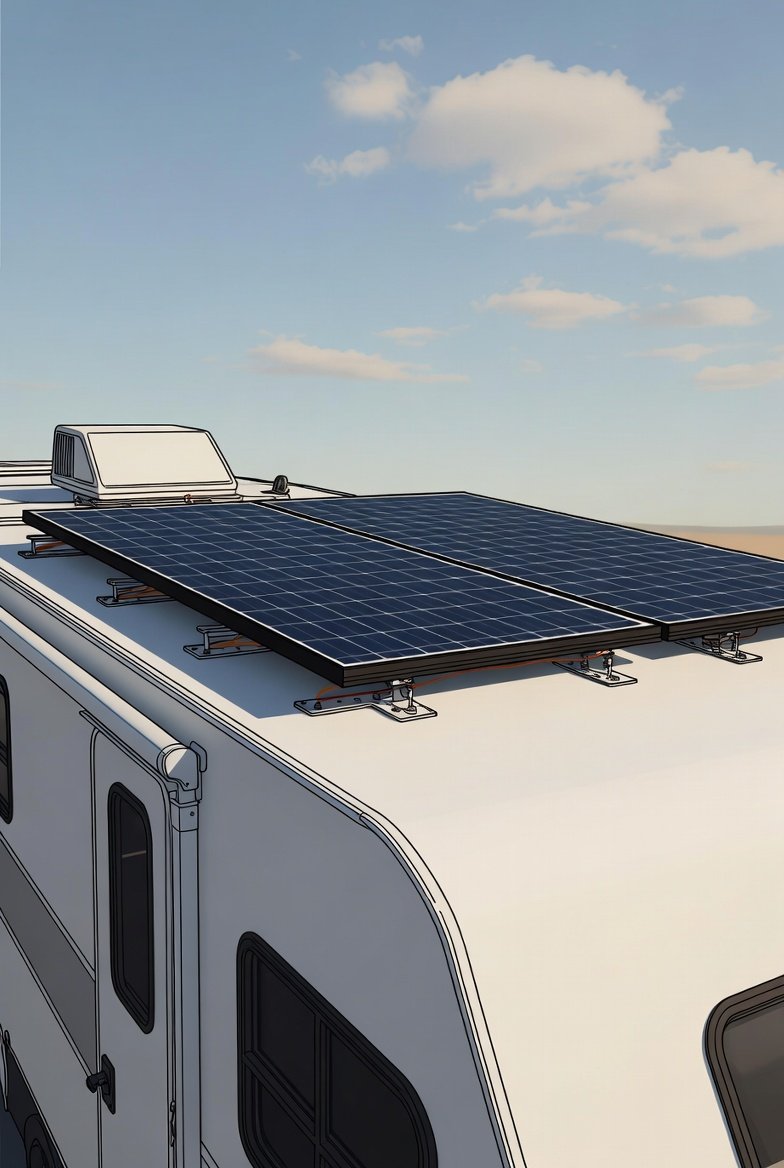
Rigid panels are mounted above the roof using aluminum brackets.
This creates a small gap beneath the panel that allows air to circulate.
Airflow helps cool the panel surface and improves electrical efficiency.
Flexible panels bond directly to the roof surface.
They are lighter and lower profile but tend to operate at higher temperatures because airflow beneath the panel is limited.
Rigid panels therefore remain the preferred choice for long-term installations.
A complete explanation of RV solar panel systems can be found here:
rv-solar panels
Mounting Systems Used on RV Roofs
Several mounting methods are commonly used in RV solar installations.
The most widely used system is the aluminum Z-bracket mount.
These brackets raise the panel slightly above the roof surface and provide secure attachment points.
The gap beneath the panel improves airflow and cooling.
Tilt mounts are occasionally used by RV owners who remain parked in one location for long periods. These mounts allow panels to be angled toward the sun to increase energy production.
However, tilt mounts are less common on traveling RVs because panels must be lowered before driving.
Adhesive mounting systems are sometimes used when roof penetrations must be avoided. These systems rely on strong bonding materials rather than screws.
Although adhesive systems can work well, bracket mounting remains the most reliable approach for most installations.
Thermal Behavior of Solar Panels on RV Roofs
Solar panels convert sunlight into electricity, but they also absorb heat.
High temperatures reduce panel efficiency because voltage decreases as solar cells warm up.
Panels mounted directly against the roof surface can become significantly hotter.
Panels mounted slightly above the roof allow airflow underneath, which reduces temperature and improves electrical performance.
This difference becomes noticeable during hot summer conditions when solar panels should be producing their highest output.
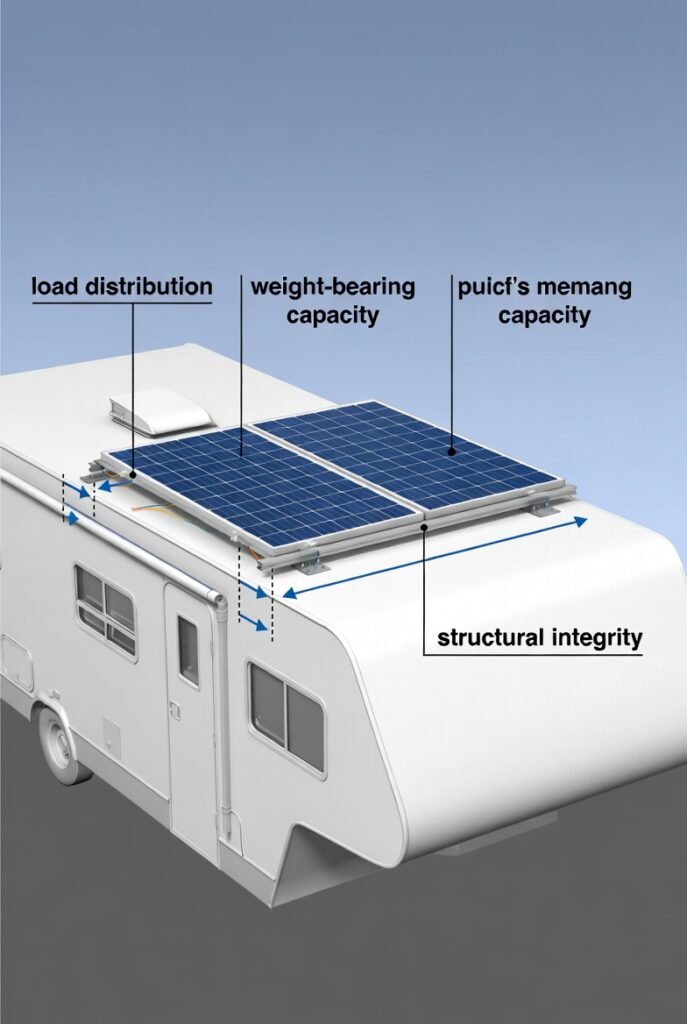
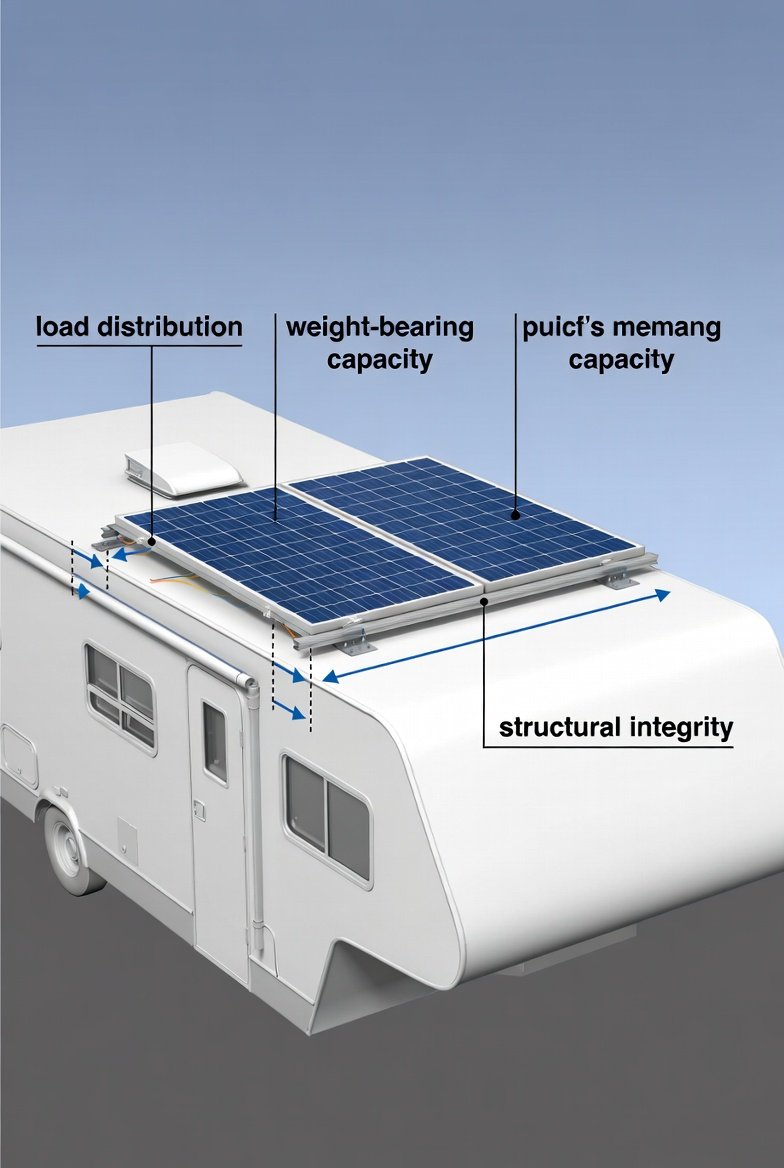
Structural Load and Weight Distribution
Solar panels add weight to the RV roof, but the total weight is usually modest.
Typical panel weights include:
- 100-watt panel → approximately 12–15 pounds
- 200-watt panel → approximately 25–30 pounds
Even several panels rarely exceed safe roof load limits.
The more important factor is weight distribution across roof supports.
Panels should be mounted across roof framing structures instead of concentrating weight in a single area.
Spreading the load prevents localized stress on the roof surface.
Solar Wiring and Roof Entry Points
Solar electricity must travel safely from the roof to the RV battery system.
Most installations use a sealed roof cable gland that allows wires to pass through the roof while preventing water leaks.
The typical wiring path is:
Solar Panels → Roof Gland → Charge Controller → Battery Bank
Keeping wiring runs short reduces electrical resistance and improves charging efficiency.
Wires should also be secured against vibration and protected from sharp edges.
Understanding how solar current flows through the system is important for accurate monitoring and battery protection.
More detail on electrical monitoring is explained here
battery shunt
Roof Space Limits and Panel Capacity
The amount of solar capacity an RV can support often depends on available roof space.
Typical roof capacities include:
RV Type | Typical Solar Capacity |
Small camper van | 200–400 watts |
Travel trailer | 400–800 watts |
Large motorhome | 800–1200 watts |
Panel dimensions vary by manufacturer, but most rigid panels require roughly 8–12 square feet of roof space.
This is why many RV systems use several smaller panels instead of one large panel.
Situations Where Roof Solar Becomes Difficult
Some RV roofs present limitations that make solar installation more challenging.
These situations include:
- large rooftop air conditioners occupying most of the roof
- curved roof designs with limited flat surface area
- excessive shading from vents and antennas
When roof space becomes limited, portable solar panels can sometimes supplement roof-mounted systems.
Common RV Solar Installation Mistakes
Many solar problems originate from installation errors rather than equipment issues.
Common mistakes include:
- installing panels where air conditioners create constant shadows
- sealing roof penetrations improperly
- routing wires across sharp roof edges
- mounting panels flush against the roof without airflow clearance
Avoiding these mistakes greatly improves solar system reliability.
Practical RV Solar Roof Planning Checklist
Before installing solar panels on an RV roof, consider the following checklist:
- identify open sunlight zones on the roof
- determine safe cable entry location
- ensure airflow clearance beneath panels
- distribute panel weight across roof supports
- avoid shading from rooftop equipment
Careful planning at this stage often prevents many future system problems.
Conclusion
Solar panels work extremely well on RV roofs when installation constraints are understood and respected.
The panels themselves rarely determine system performance.
Instead, successful RV solar systems depend on thoughtful roof layout, proper mounting methods, careful wiring routes, and minimizing shading from rooftop structures.
When these elements are planned correctly, roof-mounted solar panels can provide dependable electrical power for years of off-grid travel.