
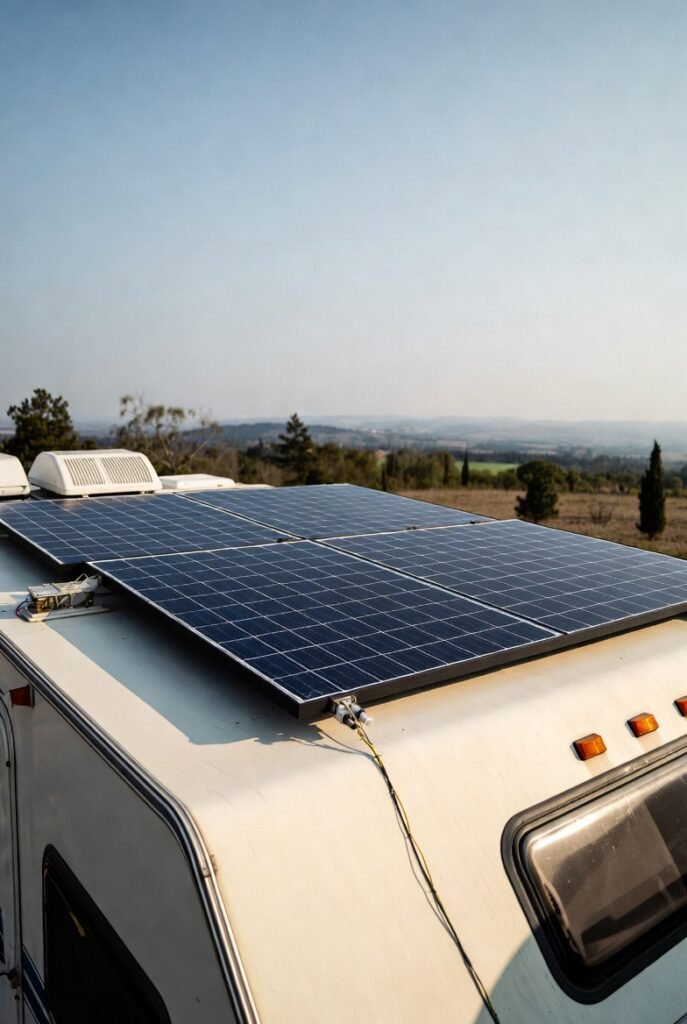
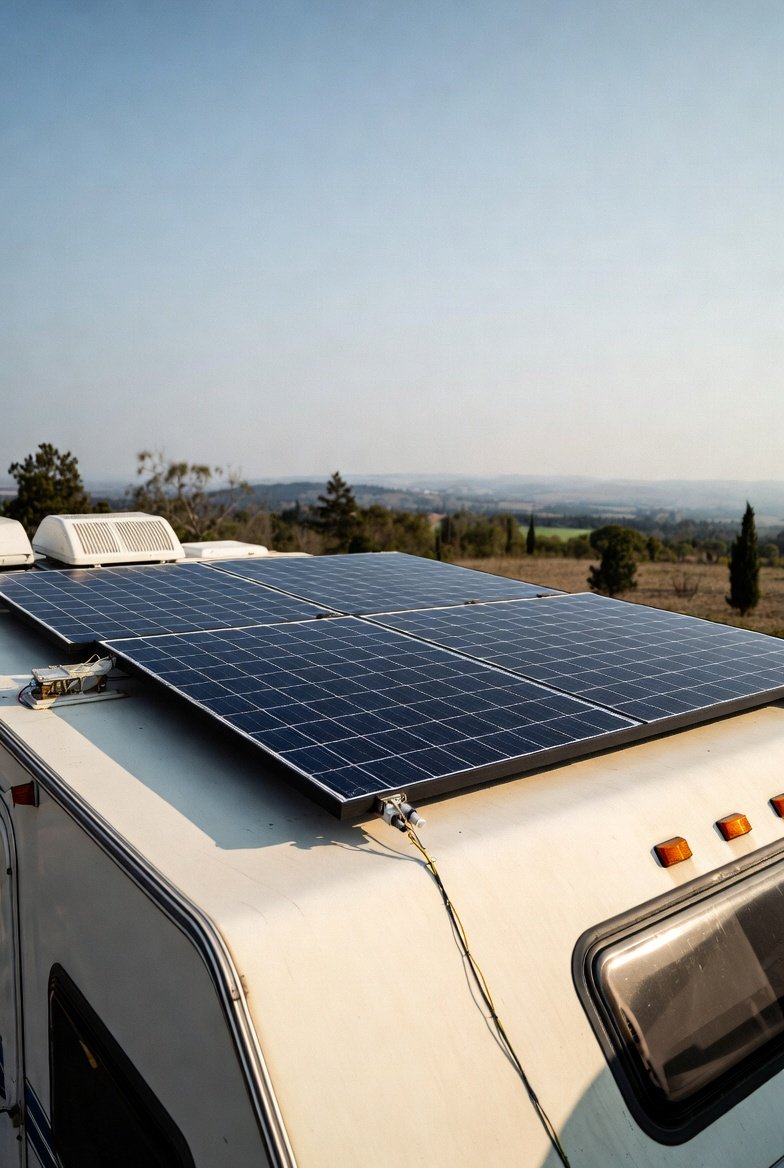
RV Solar Panels: What They Do, How Many You Need, and Realistic Power Expectations
For many RV owners, solar power begins with a simple goal:
stay off-grid longer without running a generator.
You park somewhere remote.
The batteries start dropping.
Soon you must either start the generator or drive somewhere with hookups.
RV solar panels solve that problem by turning sunlight into electricity that continuously recharges your battery bank.
But solar power in an RV works well only when the system is sized and designed correctly.
Too small and your batteries slowly drain every day.
Too large and you spend thousands on equipment you rarely use.
The purpose of this guide is to explain:
- how RV solar panels actually work
• how many panels most RVs realistically need
• wiring and shading issues that affect performance
• what solar panels can and cannot power
Understanding these fundamentals helps RV owners build solar systems that are reliable rather than frustrating.
Short Answer
RV solar panels charge the battery bank using sunlight so the RV can operate off-grid without shore power or a generator.
Most RV systems range between 300W and 800W of solar panels, producing roughly 1–4 kWh of energy per day depending on sunlight conditions.
Solar panels easily support lighting, electronics, refrigerators, and charging devices — but heavy loads like air conditioners typically require very large battery banks or additional power sources.
How RV Solar Panels Actually Work
An RV solar system converts sunlight into stored electrical energy that your RV can use later.
The energy flow usually follows this path:
Solar Panels → Charge Controller → Battery Bank → Inverter → Appliances
Each component plays a different role.
Solar Panels
Panels convert sunlight into direct current (DC) electricity.
This electricity flows into the charge controller.
Charge Controller
The charge controller regulates voltage and current so the batteries charge safely. Without it, batteries would overcharge and become damaged.
Battery Bank
The batteries store solar energy produced during the day so power is available at night or during cloudy conditions.
Inverter
If the RV uses standard household appliances, the inverter converts DC battery power into AC electricity.
Solar panels do not power appliances directly — they recharge the batteries that run the system.
For a complete overview of system architecture, see
How Much Solar Power an RV Actually Needs
Solar system sizing begins with estimating daily electricity use.
A practical formula used in solar design is:
Daily Energy Production ≈ Panel Watts × Peak Sun Hours × System Efficiency
Typical RV assumptions:
- Peak sun hours: 4–6 hours/day
• System efficiency: 70–80%
Example calculation:
400W solar system
400W × 5 hours × 0.75 efficiency
≈ 1500 watt-hours per day
This amount of energy can easily support small electronics, lighting, and moderate appliance use.
Typical RV Solar System Sizes
Most RV systems fall within predictable ranges.
RV Usage Style | Typical Solar Size | Estimated Daily Output | Best Use |
Weekend camping | 100–200W | 400–800 Wh | lights, phones |
Casual boondocking | 300–600W | 1000–2500 Wh | fridge, fans |
Frequent off-grid | 600–1000W | 2500–4000 Wh | laptops, appliances |
Full-time off-grid | 1000W+ | 4000–6000 Wh | larger battery banks |
System performance depends heavily on battery capacity.
Battery sizing and storage considerations are explained here:
solar battery bank
Series vs Parallel Wiring for RV Solar Panels
Solar panels can be wired in series, parallel, or a combination of both.
Each configuration affects voltage and current.
Wiring Method | Result | Best For |
Series | Higher voltage | MPPT systems |
Parallel | Higher current | shaded environments |
Series-parallel | balanced | larger arrays |
Series Wiring
Panels connected in series increase voltage.
Advantages:
- higher efficiency with MPPT controllers
• reduced voltage loss over distance
• smaller wire size required
Parallel Wiring
Panels connected in parallel increase current.
Advantages:
- better performance when one panel becomes shaded
• easier troubleshooting
Most modern RV systems with MPPT controllers operate best using series wiring.
Charge controller selection affects overall system efficiency. More details:
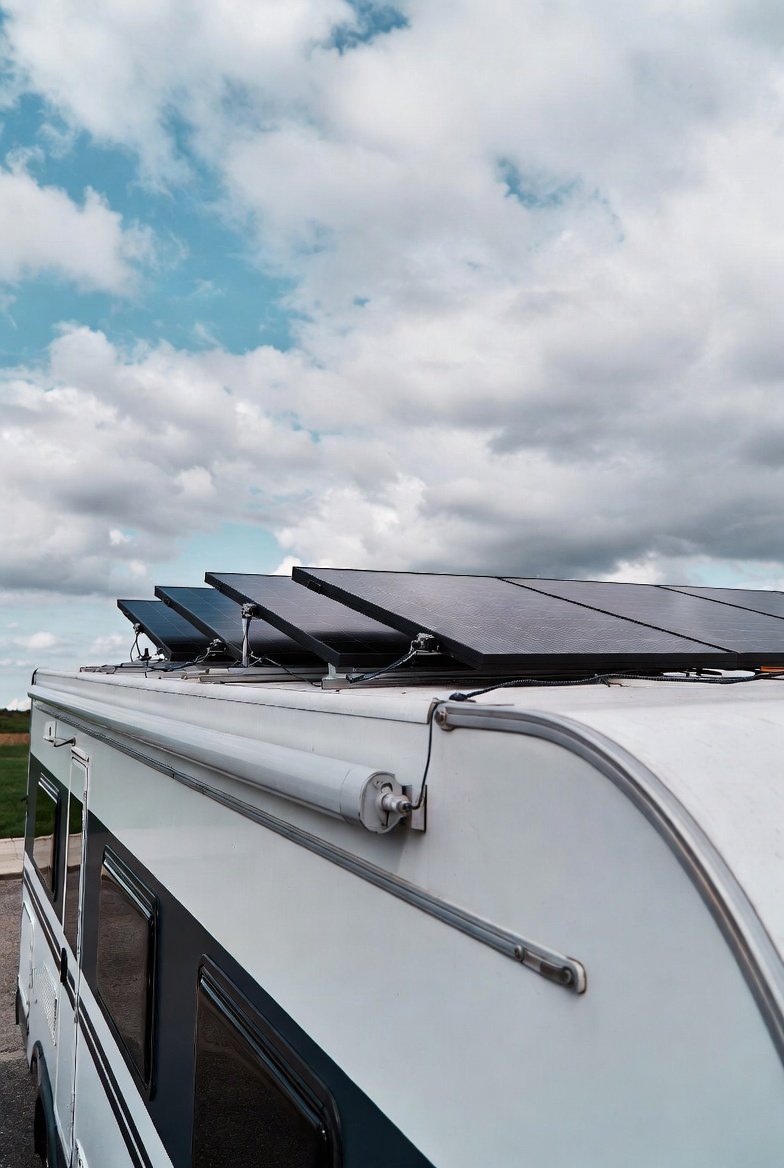
Roof Space and Shading: The Biggest RV Solar Limitation
RV roofs rarely provide perfect solar conditions.
Common obstacles include:
- air conditioning units
• roof vents
• antennas
• satellite dishes
• skylights
Even small shadows can reduce solar output significantly because panels operate as connected circuits.
Ways to reduce shading losses:
- keep panels away from AC units
• maintain spacing between panels
• route wiring carefully around obstacles
• place panels toward open roof sections
Careful panel placement can improve solar production more than simply adding more panels.
What RV Solar Panels Can Actually Power
Understanding realistic power limits prevents disappointment.
Device | Power Consumption | Solar Suitability |
LED lights | 5–20W | excellent |
Phone charging | 10–20W | excellent |
Laptop | 40–80W | excellent |
Vent fans | 30–60W | excellent |
12V refrigerator | 60–120W | good |
Microwave | 800–1200W | limited |
Air conditioner | 1500–3000W | difficult |
Solar systems excel at supporting battery charging and light electrical loads.
Heavy appliances require very large battery capacity and significant solar production.
Monitoring battery usage accurately becomes important in these systems. A deeper explanation is available here:
battery shunt
RV Solar Panel Cost Reality
Solar system costs vary widely depending on size and battery chemistry.
Typical system costs:
System Type | Approx Cost |
200W starter system | $500–$900 |
400–600W mid-size | $1200–$2500 |
800–1200W full system | $3000–$7000 |
Lithium batteries increase upfront cost but provide:
- longer lifespan
• deeper discharge capability
• lighter weight compared to lead-acid batteries
For travelers who frequently camp without hookups, solar often becomes a worthwhile long-term investment.
When RV Solar Panels May Not Be Necessary
Solar panels provide the most benefit for RV owners who spend time boondocking or traveling off-grid.
Solar may not be necessary if:
- you primarily stay at RV parks with hookups
• you only camp occasionally
• generator use is acceptable
• roof space is limited
In these situations, installing solar panels may offer limited value.
Planning an RV Solar Installation
Before installing panels, evaluate several key factors.
Important questions include:
- how much electricity the RV uses daily
• how much roof space is available
• battery bank capacity
• sunlight conditions where you travel
Solar panels should always be designed as part of a complete electrical system rather than added as a standalone upgrade.
When properly sized, solar allows RV travelers to operate quietly and independently in remote locations without relying on generators.
Frequently Asked Questions
How many solar panels does an RV need?
Most RVs use between 300W and 800W of solar panels, depending on energy consumption and battery capacity.
Is 200 watts of solar enough for an RV?
A 200W system can support lighting, phone charging, and small electronics but may struggle to keep up with refrigerators or extended power use.
Do RV solar panels charge batteries while driving?
Yes, solar panels continue producing electricity while driving, though most charging during travel usually comes from the alternator.
Do solar panels work on cloudy days?
Yes, but output decreases significantly. Production may drop to 10–30% of normal levels depending on cloud coverage.
How much roof space do RV solar panels require?
Most 100–200W panels require about 8–12 square feet each, though panel dimensions vary by manufacturer.
Conclusion
RV solar panels provide one of the most practical ways to generate electricity while traveling.
Instead of relying on shore power or generators, solar panels continuously recharge the battery bank using sunlight.
The key to success is realistic expectations.
Solar panels are excellent for supporting lighting, electronics, refrigeration, and battery charging. Larger appliances require significantly more power and careful system design.
When the system is properly sized and installed, RV solar power allows travelers to camp quietly and independently in places where traditional electrical hookups do not exist.