
Portable Solar Panel Kit: When Portable Solar Makes More Sense Than Roof Panels
Many RV solar systems start with roof panels.
Panels mounted on the roof charge the battery bank whenever sunlight hits them.
In open desert environments this works extremely well.
But real-world camping conditions are rarely perfect.
You park under trees for comfort.
The RV sits in shade.
Meanwhile sunlight is hitting open ground just a few meters away.
When sunlight can’t reach roof panels, portable solar panel kits become extremely useful.
Instead of being fixed to the RV roof, portable panels can be placed where sunlight is strongest and tilted toward the sun.
For many RV travelers, portable solar doesn’t replace roof solar — it solves the situations where roof solar stops working effectively.
Short Answer
A portable solar panel kit is a folding, movable solar system that charges RV or off-grid batteries through a charge controller. It’s most useful when roof panels are shaded, roof space is limited, or winter sun angles reduce roof performance. Portable solar doesn’t replace roof solar — it solves sunlight access problems.
What a Portable Solar Panel Kit Actually Is
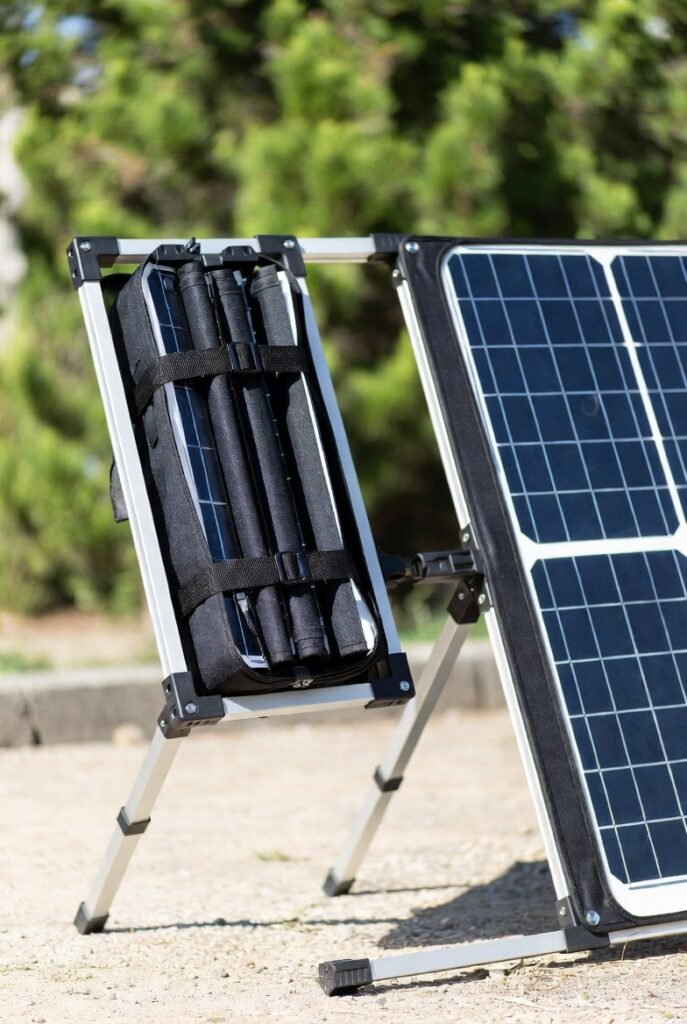
A portable solar panel kit is a movable solar charging system designed to charge batteries without permanent installation.
Most kits include several components:
- folding solar panels
- a charge controller (often integrated)
- cables and battery connectors
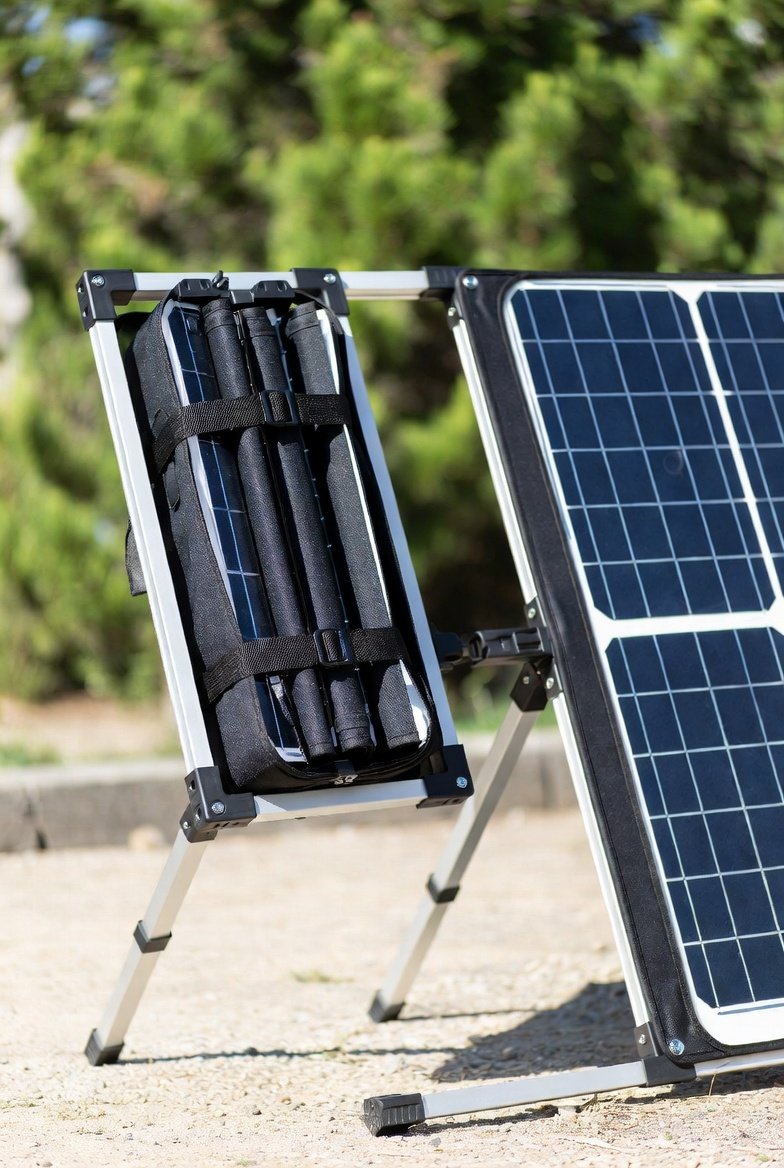
- adjustable kickstands
- a suitcase-style folding frame or carry case
When stored, the panels fold into a compact unit.
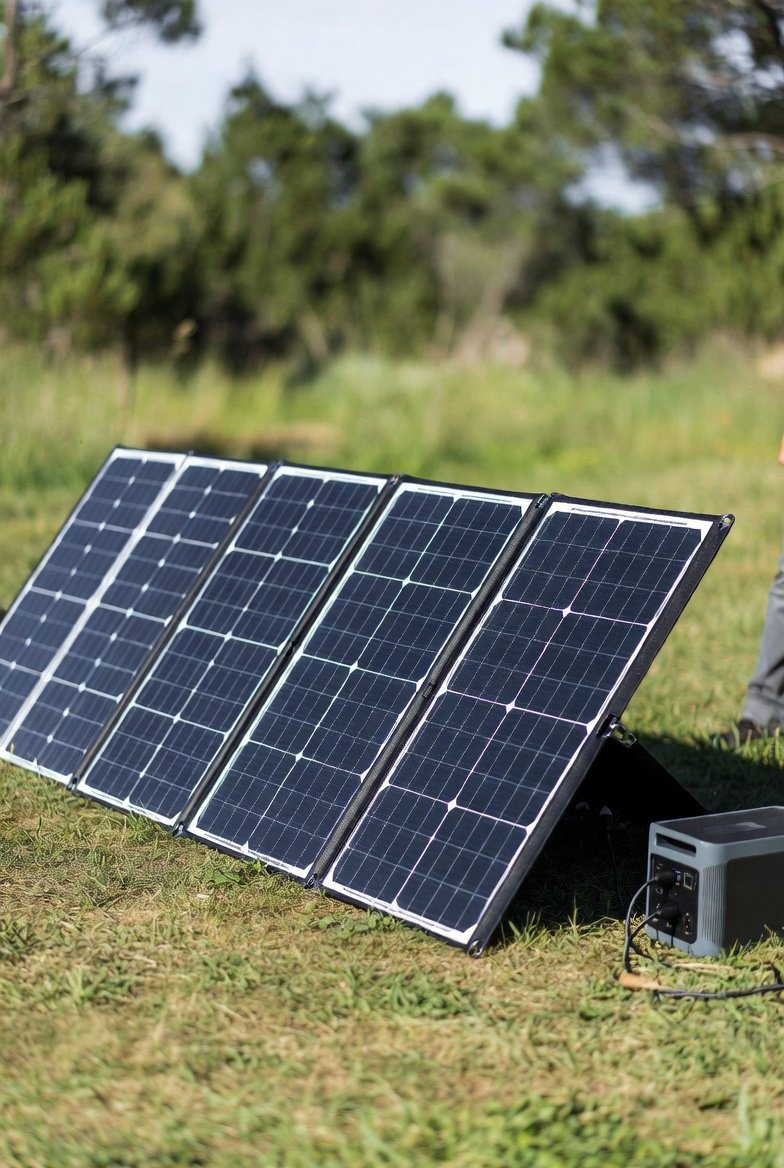
When deployed, they unfold and face the sun, producing electricity that flows through the charge controller into the RV battery bank.
Because portable solar panels are movable, they can be placed where sunlight is strongest.
Why Portable Solar Panels Exist
Portable solar panels solve several real-world limitations of roof systems.
Shaded Campsites
Many RV parks contain large trees. While shade improves comfort, it drastically reduces solar production on roof panels. Portable panels can be placed away from the RV in full sunlight.
Limited Roof Space
RV roofs contain many components:
- air conditioning units
- vents
- skylights
- antennas
These reduce available panel space. Portable kits add solar capacity without modifying the roof.
Seasonal Sun Angles
During winter, sunlight strikes the earth at lower angles. Portable panels can be tilted toward the sun, producing more electricity than flat roof panels.
A full off-grid solar architecture overview is explained here:
Scope Note
This guide explains what portable solar panel kits are, how folding solar panels work, how they connect to RV batteries, and when portable solar outperforms roof-mounted panels. It does not cover brand recommendations, inverter sizing, or full off-grid system design.
How Portable Solar Panel Kits Work
Portable solar systems follow the same electrical flow as fixed solar systems.
Solar panel → charge controller → battery → RV electrical loads
- Solar panels convert sunlight into electricity.
- The charge controller regulates charging voltage and current.
- Batteries store the electricity produced during the day.
- RV appliances use stored power through DC circuits or an inverter.
If you plan to run AC appliances, inverter capacity becomes the limiting factor in system design:
Visual Reference
Typical portable solar setups include:
- Folding solar panels deployed with kickstands
• RV parked in shade with panels placed in direct sunlight
• Panels tilted toward the sun for improved output
These placement advantages are what make portable solar effective.
Portable Solar Panel Kit for RV Camping and Boondocking
Portable solar systems are especially useful for RV travelers who camp off-grid or move frequently between campsites.
Typical real-world scenarios include:
- camping under trees while panels sit in sunlight nearby
- adding temporary solar capacity during heavy power use
- adjusting panel angle during winter travel
- supplementing an existing roof solar system
Portable solar provides flexibility in situations where roof solar systems lose efficiency.
How Portable Solar Panels Connect to RV Systems
Portable solar kits normally connect to RV electrical systems in three ways.
1. Direct Battery Charging
The most common setup.
Panels connect to the battery bank through a charge controller using:
- alligator clamps
- SAE connectors
- MC4 connectors
Electricity flows directly into the battery bank.
2. Portable Power Stations
Portable solar panels often charge power stations such as EcoFlow, Bluetti, or Jackery units.
These devices contain their own charge controllers and battery storage.
3. Hybrid Solar Systems
Many RV owners combine roof panels and portable panels.
Roof panels charge batteries automatically during the day.
Portable panels provide additional production when roof panels are shaded.
Battery capacity planning becomes important in these hybrid systems:
Battery monitoring tools help track real charging performance:
How to Size a Portable Solar Panel Kit
A simple formula helps estimate solar production.
Daily Energy (Wh) ≈ Panel Watts × Peak Sun Hours × 0.7
The 0.7 factor accounts for real-world losses such as:
- wiring loss
- heat loss
- imperfect sun angles
- charge controller efficiency
Example estimates:
Panel Size | Estimated Daily Production |
100W portable panel | 350–450 Wh |
200W kit | 700–900 Wh |
300W kit | 1000–1300 Wh |
Actual output depends heavily on sunlight conditions and panel positioning.
What to Look for in a Portable Solar Panel Kit
A practical portable solar kit should include several features.
MPPT charge controller
MPPT controllers are more efficient than PWM controllers.
Long solar cables
20–30 feet of cable allows panels to reach sunlight when the RV is parked in shade.
Adjustable kickstands
Kickstands allow panels to tilt toward the sun.
Durable folding frame
Portable panels must survive frequent transport and setup.
Portable Solar vs Roof Solar Panels
Portable solar and roof solar systems serve different purposes.
Feature | Portable Solar | Roof Solar |
Installation | none required | permanent |
Positioning | movable | fixed |
Sun angle | adjustable | flat |
Charging | manual setup | automatic |
Maintenance | manual handling | minimal |
Theft risk | possible | low |
Roof-mounted installations are explained here:
Security Considerations for Portable Solar Panels
Portable solar panels are visible and movable, which introduces some security considerations.
In most campgrounds, theft risk is relatively low, but it is not impossible.
Several simple practices reduce risk:
- placing panels within view of the RV
- deploying panels only while present at the campsite
- using lightweight locking cables if desired
For most RV travelers, common-sense placement is usually sufficient.
Real-World Limitations of Portable Solar Panels
Portable solar systems provide flexibility but introduce trade-offs.
Manual setup
Panels must be unfolded and positioned each time they are used.
Cable distance limitations
Longer cable runs slightly reduce power due to voltage drop.
Weather exposure
Panels should be stored during storms or heavy wind.
Despite these limitations, portable solar remains one of the most practical upgrades for RV solar systems that frequently encounter shade.
When Portable Solar Panels Work Best
Portable solar kits work best when:
- campsites are partially shaded
- roof space is limited
- additional solar capacity is needed
- winter travel reduces roof solar efficiency
In these scenarios, portable panels can significantly improve energy production.
When Roof Solar Systems Work Better
Portable solar is not always necessary.
Roof systems may be preferable when:
- campsites have consistent full sunlight
- the RV roof has ample panel space
- users prefer automatic charging without setup
Conclusion
Portable solar panel kits offer a flexible way to generate electricity when roof-mounted solar panels cannot access direct sunlight.
Their ability to move and tilt toward the sun makes them particularly useful in shaded campsites, winter conditions, and RV systems with limited roof space.
While portable solar requires manual setup, it provides a practical way to expand an RV solar system and maintain reliable off-grid power.
If your RV solar system struggles because sunlight can’t reach the roof, portable solar is not an upgrade — it’s the correct tool.
FAQ
What is a portable solar panel kit?
A portable solar panel kit is a folding solar charging system designed to recharge batteries for RVs, camping setups, or off-grid systems without permanent installation.
How much power does a portable solar kit produce?
Most portable solar kits between 100W and 300W produce roughly 350–1300 watt-hours per day depending on sunlight and panel positioning.
Can portable solar panels charge RV batteries directly?
Yes. Most portable solar kits connect directly to RV batteries through a charge controller using clamps or solar connectors.
Are folding solar panels better than roof panels?
Portable panels are better when sunlight cannot reach roof panels. Roof panels are better for automatic daily charging in full sunlight.
Do portable solar panels work in cloudy weather?
Yes, but production drops significantly during heavy cloud cover compared to full sun conditions.