
Solar Panel Roof Mounting Kit: What’s Included, Which Kit Fits Your Roof, and When Standard Kits Fail
A solar panel roof mounting kit only looks simple when the roof is simple.
That is where many buyers make the wrong assumption.
They picture a kit as a box of rails, brackets, and clamps. In real installs, the correct roof-mount system depends on roof material, roof condition, attachment style, waterproofing method, and array layout. Across EnergySage, SolarReviews, IronRidge, and Unirac resources, roof-mount systems are consistently treated as assemblies built around attachments, flashing or waterproofing, rails or rail-less support, and module clamps—not one universal hardware bundle.
So the right question is not:
Which roof mounting kit is best?
The right question is:
Which mounting kit family fits this roof without creating waterproofing, structural, or compatibility problems?
For broader off-grid architecture, see
best-off-grid-solar-system
For inverter-side system planning, see
Quick Verdict
A solar panel roof mounting kit is not universal.
The correct kit depends, in this order:
- roof type
- roof condition
- attachment and waterproofing method
- rail-based vs rail-less system style
- module and layout compatibility
If you reverse that order and start by shopping random kits first, you increase the chance of choosing the wrong system.
Quick Answer
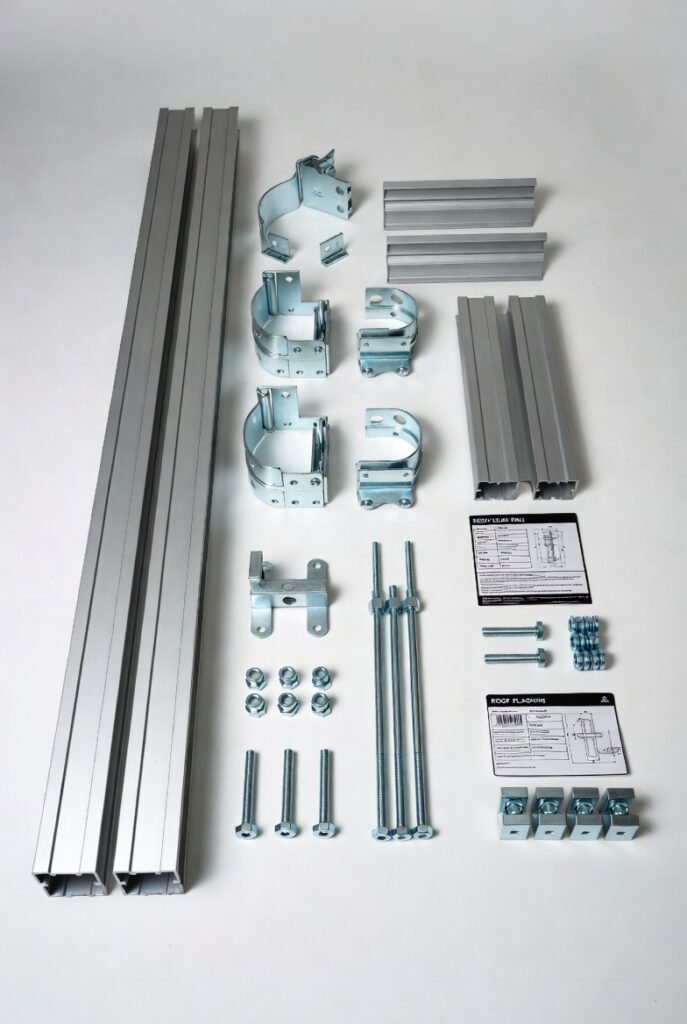
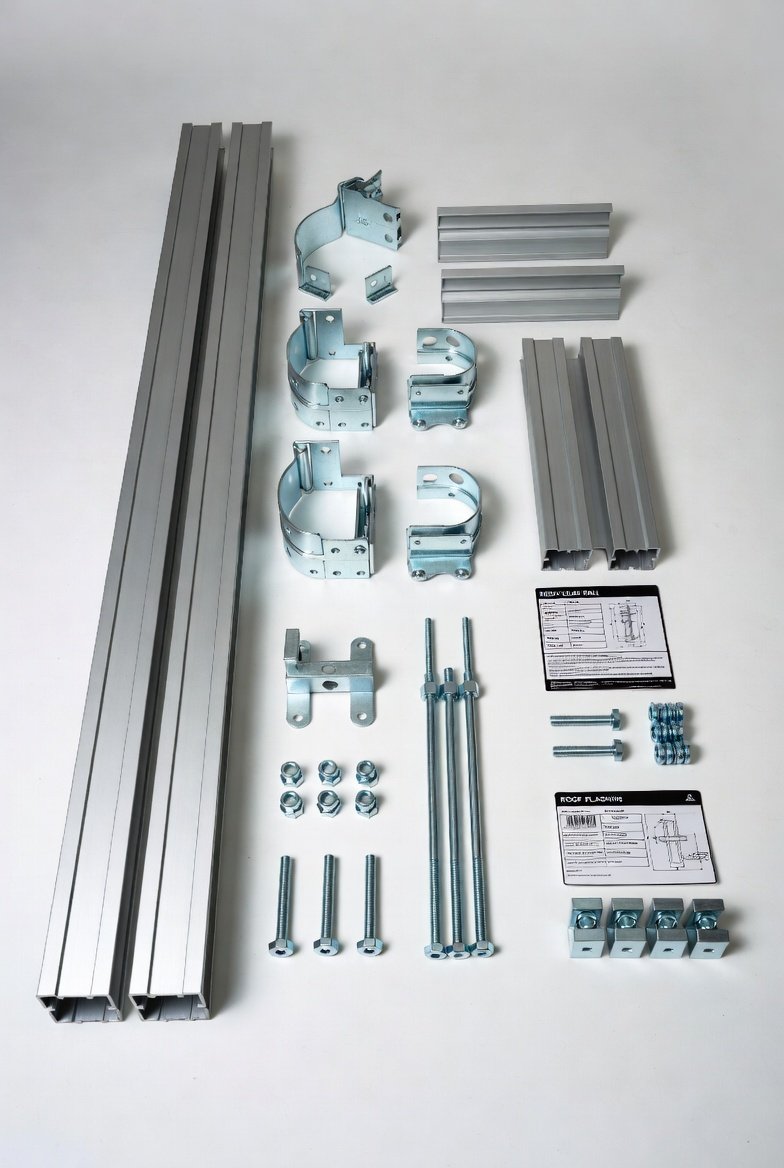
A solar panel roof mounting kit is the set of hardware used to attach solar modules to a roof safely and weather-tight. Depending on the roof, that usually includes:
- roof attachments
- flashing or waterproofing components
- rails or rail-less supports
- end clamps and mid clamps
- roof-specific parts such as seam clamps or tile-mount components
That system-level definition is reflected in both publisher explainers and manufacturer product architecture.
Roof-Type Decision Matrix
Roof Type | Likely Kit Family | Main Waterproofing Issue | Main Caution |
Asphalt shingle | Flashed attachment + rail-based pitched-roof system | Penetration sealing | Roof age and correct rafter attachment |
Standing-seam metal | Seam-clamp or metal-roof-specific system | Clamp/profile compatibility | Wrong seam/profile assumption |
Tile roof | Tile-specific mount or tile-replacement attachment | Tile breakage + flashing detail | Generic kit mismatch |
Flat roof | Flat-roof tilt or ballast-style system | Membrane/load/water path logic | Wrong category entirely |
This roof-type split aligns with how EnergySage, SolarReviews, IronRidge, and Unirac distinguish rooftop mounting systems.
How a Roof Mount Fits Into the System
A roof mounting kit is only one layer of the larger solar system:
Solar panels → roof-mount structure → inverter or charge controller input → battery bank (if used) → inverter → electrical loads
The kit is the structural interface between the modules and the roof.
If that interface is wrong, the rest of the equipment quality matters less. Strong panels do not fix bad flashing. A good inverter does not fix the wrong attachment family. A battery bank does not fix a roof that should have been replaced first.
For battery storage planning, see
solar-battery-bank
For MPPT controller logic, see
mppt-solar-charge-controller
What a Roof Mounting Kit Usually Includes
A real roof mounting kit is not one product. It is a roof-specific hardware assembly.
1) Roof Attachments
These are the structural connection points between the array and the roof interface or framing. Depending on the roof, this can mean flashed attachments into rafters, standing-seam clamps, tile-specific mounts, or flat-roof-specific components. Manufacturer systems consistently treat the attachment method as the starting point of the design.
2) Flashing or Waterproofing Components
On many pitched roofs, especially shingle roofs, the mounting system includes flashing or integrated waterproofing details designed to keep roof penetrations weather-tight. IronRidge’s QuickMount materials explicitly position waterproofing as part of the roof-mount solution itself.
3) Rails or Rail-Less Supports
Some systems use conventional rails across multiple roof attachments. Others use rail-less or reduced-rail architecture, especially in certain metal-roof applications. Unirac’s pitched-roof lineup clearly separates these system families.
4) Module Clamps
Most roof systems also depend on end clamps and mid clamps matched to module-frame thickness. That sounds small, but module compatibility is part of the real kit decision on manufacturer systems.
The First Rule: Roof Type Decides the Kit
This is the core of the whole article.
A roof mounting kit is not universal because roofs are not universal.
The correct decision starts with the roof surface, not the brand name of the kit.
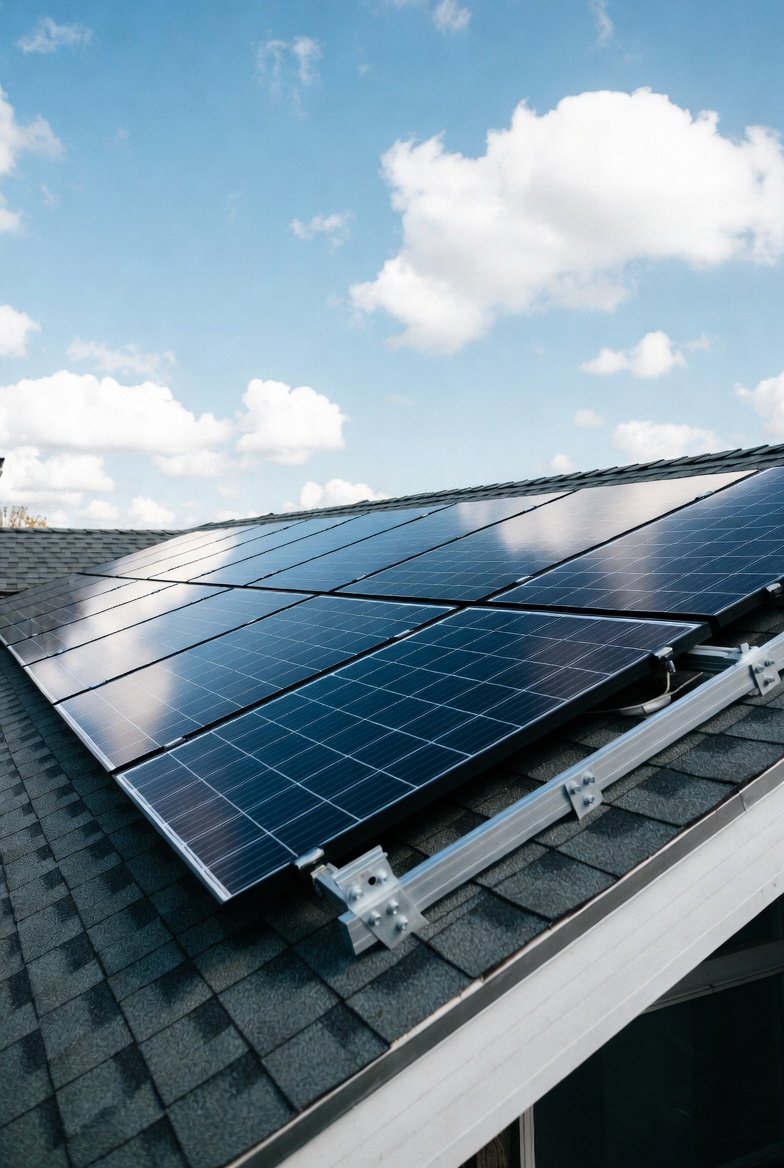
1) Asphalt Shingle Roof Mounting Kits
This is the most familiar residential category.
A standard shingle-roof system often uses:
- flashed roof attachments
- rails or standard pitched-roof supports
- clamps
- waterproofing details around roof penetrations
This category is common because shingle roofs are common, but buyers still underestimate how much the decision depends on roof age, proper attachment location, and flashing quality. EnergySage and SolarReviews both frame rooftop mounting as a weatherproof structural system rather than just a bracket purchase.
Best fit:
- composition shingle roofs in good condition
- standard pitched-roof residential arrays
- layouts where conventional rail-based mounting works cleanly
Biggest caution:
A mounting kit does not fix an aging roof. If the roof is near replacement, the right answer may be roof work first.
2) Metal Roof Mounting Kits
Metal roofs are not one category.
Standing-seam metal roofs may use seam clamps that avoid penetrations in some designs, while corrugated or exposed-fastener metal roofs often require metal-roof-specific attachment logic. Manufacturer and publisher guidance both emphasize that metal-roof mounting varies significantly by profile, gauge, and roof design.
Best fit:
- standing-seam roofs with compatible clamp systems
- metal roofs with correctly matched roof-specific hardware
Biggest caution:
Do not assume “metal roof” means non-penetrating. The profile decides that.
3) Tile Roof Mounting Kits
Tile roofs are where generic roof-kit thinking breaks fastest.
Tile-mount systems often require tile-specific attachments, tile-replacement mounts, or specialized waterproofing details to protect against water intrusion and tile breakage. IronRidge’s QuickMount tile products and SolarReviews’ tile-roof guidance both reinforce that tile needs a dedicated system approach.
Best fit:
- tile roofs where tile-specific mounting systems are available
- projects where installers understand tile handling and waterproofing detail
Biggest caution:
Tile is not just another pitched roof. A generic “roof kit” is often the wrong mental model here.
4) Flat Roof Mounting Kits
Flat roofs are often grouped into this keyword, but the system logic changes here.
A flat-roof system may use tilt legs, ballasted layouts, or flat-roof-specific mounting hardware rather than the same flush-mount logic used on pitched roofs. Unirac’s flat-roof category and IronRidge’s flat-roof attachment products both treat flat roofs as a separate mounting family.
Best fit:
- flat roofs where tilt, ballast, membrane protection, and roof-load logic are properly addressed
Biggest caution:
If the roof is flat, stop thinking in terms of a standard pitched-roof kit. This is often a different mounting category.
Rail-Based vs Rail-Less: Which One Actually Fits?
Many pages mention this split but do not make it useful.
System Style | Best When | Main Advantage | Main Caution |
Rail-based | Standard pitched roofs, broader adjustability needed | Familiar, flexible, widely supported | More material and hardware |
Rail-less / reduced-rail | Some metal roofs or roof-specific systems | Fewer parts, cleaner install path in the right use case | Not universal; highly roof/profile dependent |
Rail-based systems remain the safer default across many pitched-roof installs because they are adjustable and widely supported. Rail-less systems can be excellent in the right roof family, especially some metal-roof applications, but they are not automatically better. Unirac’s METAL X line is a strong example of rail-less architecture being presented as a roof-specific solution, not a universal upgrade.
Waterproofing Is Part of the Kit Decision
This is one of the biggest quality gaps in weak content.
On many pitched roofs, especially shingle roofs, the mounting kit is partly a water-management system. Flashing, attachment placement, sealing sequence, and roof condition all matter. IronRidge’s QuickMount technology and waterproofing materials are explicit on this point: roof-mount components are designed to improve waterproof performance, not just hold panels down.
That means buyers should stop asking only:
- How many rails?
- How many brackets?
- How much does the kit cost?
And start asking:
- How does this system keep the roof weather-tight?
- Is the waterproofing approach correct for this roof surface?
- Is this roof still worth mounting on?
A cheap kit is not a good kit if it creates leak risk.
What Actually Goes Wrong When the Wrong Roof Kit Is Chosen
This is the real-world failure section many pages skip.
1) Leak Risk from Bad Flashing Logic
If the kit uses the wrong waterproofing method for the roof surface, the array may stay attached while the roof envelope fails.
2) Attachment Mismatch
A roof profile mismatch can turn an apparently compatible kit into a bad structural fit, especially on metal and tile roofs.
3) Rework Costs
Choosing a standard kit for a roof that needs roof-specific hardware can mean tearing back work, replacing parts, or redoing attachment locations.
4) Roof Replacement Conflict
Installing solar over a roof near the end of its life can force expensive remove-and-reinstall work later.
5) Wrong Category Selection
Using pitched-roof kit logic on a flat roof, or generic-roof logic on tile, is often not a small mistake. It is a category mistake.
That is why the roof type has to decide the system family before the purchase decision gets narrow.
When a Standard Roof Mounting Kit Is the Wrong Choice
A standard roof mounting kit is often the wrong answer when:
The Roof Is Flat
Flat roofs usually need flat-roof-specific tilt, ballast, or membrane-aware mounting logic, not a simple pitched-roof kit.
The Roof Is Tile
Tile roofs commonly require tile-specific attachments and waterproofing methods rather than generic pitched-roof hardware.
The Roof Is Aging
Even the correct hardware does not solve a roof that should be replaced first.
The Roof Geometry Is Awkward
Dormers, broken planes, valleys, limited rafter alignment, and shading complexity can make a simple “kit” mindset too shallow.
The Roof Has a Better Roof-Specific System Available
Some metal roofs, for example, are better served by seam-clamp or metal-specific systems than by trying to force a generic pitched-roof kit onto them.
How to Choose the Right Roof Mounting Kit
Use this order.
Step 1: Identify the Roof Surface
Shingle, standing-seam metal, exposed-fastener metal, tile, or flat roof.
Step 2: Confirm Roof Condition
Do not design around a roof that is near replacement.
Step 3: Match the Attachment Family to the Roof
The attachment method is not interchangeable across all roofs.
Step 4: Confirm Waterproofing Logic
On pitched roofs, waterproofing detail is part of the mount choice, not a separate afterthought.
Step 5: Choose Rail-Based vs Rail-Less
Only after the roof category is clear.
Step 6: Check Module and Layout Compatibility
Clamp fit, spacing logic, and array layout still matter after the roof side is solved.
That is the right buying logic.
Not:
Which kit has the best reviews?
But:
Which mounting system family fits the roof and preserves roof integrity?
Why Roof Mounting Still Wins in Many Projects
This page is not anti-roof-mount.
Roof mounting still makes excellent sense when:
- the roof is structurally sound
- the roof surface supports a clean attachment method
- waterproofing can be handled correctly
- array placement on the roof is practical
- keeping the array close to the building is beneficial
In many homes, rooftop mounting remains the cleanest solar format because it avoids using yard space and avoids some of the land-use complexity found in ground-mount systems.
For ground-specific layout logic, see
solar-panel-ground-mount-system
Quick Verdict
A solar panel roof mounting kit is not a bag of universal hardware.
It is a roof-specific attachment and waterproofing system.
The right kit depends on:
- roof material
- roof condition
- attachment family
- waterproofing method
- rail architecture
- layout compatibility
If those factors line up, a roof-mount system can create a clean, durable, weather-tight solar installation.
If they do not, the right answer may be a different mounting category entirely.
Conclusion
Choose the roof type first.
Choose the attachment family second.
Choose the waterproofing method third.
Only then choose the kit.
That order is what keeps the decision technical instead of generic.
A solar panel roof mounting kit should be chosen the same way the rest of a good solar system is chosen:
by constraints first.
For RV-specific mounting and mobile-array logic, see
rv-solar-panels
For portable-first builds, see
portable-solar-panel-kit
Block B
Image Notes
- Roof Type Mounting Matrix Graphic
Show: asphalt shingle vs metal vs tile vs flat roof, with one line under each for likely kit family, main waterproofing issue, and biggest caution.
Alt text: Roof type comparison for solar panel roof mounting kits showing shingle, metal, tile, and flat roof logic - Roof Mount Kit Components Graphic
Show: roof attachment, flashing, rails or rail-less supports, clamps, and specialty roof-specific parts.
Alt text: Components included in a solar panel roof mounting kit including attachments, flashing, rails, and clamps - Wrong Kit Failure Modes Graphic
Show: leak risk, profile mismatch, rework cost, aging-roof conflict, wrong-category selection.
Alt text: Common problems caused by choosing the wrong solar panel roof mounting kit
FAQ
What is included in a solar panel roof mounting kit?
A roof mounting kit usually includes roof attachments, flashing or waterproofing components, rails or rail-less supports, and module clamps. Some roofs also require specialty parts such as seam clamps or tile-specific hardware.
Are roof mounting kits different for shingle, metal, tile, and flat roofs?
Yes. The roof type changes the attachment method, waterproofing approach, and sometimes the entire system family. Flat roofs often use different tilt or ballast logic than pitched roofs.
Is waterproofing part of the mounting kit decision?
Yes. On many pitched roofs, especially shingle roofs, flashing and waterproofing are core parts of the mounting system, not optional extras.
What is the difference between rail-based and rail-less roof mounting?
Rail-based systems use conventional rails across roof attachments, while rail-less systems reduce or eliminate full-length rails in certain designs. Rail-less systems are often roof-specific rather than universal.
When is a standard roof mounting kit the wrong choice?
A standard kit is often the wrong choice on flat roofs, tile roofs, aging roofs, or roofs where a roof-specific attachment system is required.